
Wednesday, March 11, 2009
Long test # 2
1. A system doing work while it heats up has a
A. +w,+q B. +w, -q C. –w, + q D. –w, -q
2. What is the pressure of 1.5 moles of gas in an 8.21L at 100K?
A. 0.5 atm B. 1.0 atm C. 1.5 atm D. 2.0 atm
3. When a 5L gas is compressed from 1 atm to 2.5 atm, what is the new volume?
A. 1.0L B. 1.5L C. 2.0L D. 2.5 L
5. If 0.1 mole of a gas at 300K is put inside a 3.0L vessel, what is P?
A. .0821 B..821 C. 8.21 D. 82.1
6. A sample of air has a vol of 22.5L when the temp is 25C. What is the new V if temp is 100C
A. 29L B. 28.2L C. 19.2 L D. 18.0L
7. At 273K, the sample at 275 mL became 325mL. What is the final temp at C?
A. 323 B. 231 C. 92 D. 50
8. What is P in torr, if vol became 1 L to 0.25L. The initial pressure is 98.0 torr
A. 392 B. 200 C. 24.5 D. 0.75
9. A cylinder has a P of 135 atm at a temp of 20C. If it is heated to 85, what is the new P?
A. 273 B. 165 C. 110 D. 1.00
10. A sample of gas occupies a V oof 0.925L at 25C and 750 mmHg. What is V at STP?
A. 0.981 B. 0.859 C. 0.836 D. 0.742
11. A 50L tank at 0.54 atm and 21C contains refrigerator gas, How many moles are present?
A. 1.12 B. 0.764 C. 0.583 D. 0.0259
II. problem Solving
1. Ge + 1/2O2 GeO H = -255 kJ
Ge + O2 GeO2 H = -534.7 kJ
Determine:.
GeO + 1/2O2 GeO2
2. Give the molecular formula:
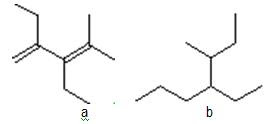
a b
3. determine the functional group of the following
a. fuels c. formic acid
b. acetone d. ethanol
4. give the name of the following;
a. a 5 carbon aldehyde c. a 3 carbon alkyne
b. a 2 carbon alcohol d. a 6 carbon ketone
5. The density of an unknown gas is 2.21 g/L at 1.00 atm and 27.0C. what is the molar mass of this gas?
6. Calculate the mass of NO (30 g/mol) gas occupying 5.2 L at STP.
LONG TEST # 1
I. True or False
1. K of an aqueous solution can be expressed in terms of Kp.
2. Catalysis only affects the rate of reaction.
3. When the concentration of the components is changed, K also changes.
4. Sweating of humans to release body heat is a way of achieving equilibrium.
5. Equilibrium constant is the ratio of the amount of products to the amount of the reactants at equilibrium.
6. The concept of H+ was introduce ed by Arrhenius.
7. The end point is reached when the color of the indicator in titration changes.
8. Baking soda and bleach are acidic; vinegar and orange juice are basic.
II. Problem Solving
1. Given: 2NO2 (brown) N2O4 (colorless). What is the color to be seen in the reaction if: (for a-c)
a. NO2 was added
b. NO2 was removed
c. catalyst was added
d. give the equilibrium constant for the reaction?
e. if [NO2] = 0.05M and [N2O4] = 1 x 10⁻⁵ M at equilibrium, what is K?
f. if [NO2] = 0.025M initially, and K is equal to 0.0625, what is the concentration of each species at equilibrium?
2. Complete the table
pH [H+] pOH [OH-] Acidic or basic
3. Give the pH at each point. A 32.00 mL of a 0.05 M HCl was titrated with a 0.011M NaOH. a. analyte? b. titrant ? c.0.00 ml d. 62.60 mL e. 145.45 f. 155.34 mL
1. A system doing work while it heats up has a
A. +w,+q B. +w, -q C. –w, + q D. –w, -q
2. What is the pressure of 1.5 moles of gas in an 8.21L at 100K?
A. 0.5 atm B. 1.0 atm C. 1.5 atm D. 2.0 atm
3. When a 5L gas is compressed from 1 atm to 2.5 atm, what is the new volume?
A. 1.0L B. 1.5L C. 2.0L D. 2.5 L
5. If 0.1 mole of a gas at 300K is put inside a 3.0L vessel, what is P?
A. .0821 B..821 C. 8.21 D. 82.1
6. A sample of air has a vol of 22.5L when the temp is 25C. What is the new V if temp is 100C
A. 29L B. 28.2L C. 19.2 L D. 18.0L
7. At 273K, the sample at 275 mL became 325mL. What is the final temp at C?
A. 323 B. 231 C. 92 D. 50
8. What is P in torr, if vol became 1 L to 0.25L. The initial pressure is 98.0 torr
A. 392 B. 200 C. 24.5 D. 0.75
9. A cylinder has a P of 135 atm at a temp of 20C. If it is heated to 85, what is the new P?
A. 273 B. 165 C. 110 D. 1.00
10. A sample of gas occupies a V oof 0.925L at 25C and 750 mmHg. What is V at STP?
A. 0.981 B. 0.859 C. 0.836 D. 0.742
11. A 50L tank at 0.54 atm and 21C contains refrigerator gas, How many moles are present?
A. 1.12 B. 0.764 C. 0.583 D. 0.0259
II. problem Solving
1. Ge + 1/2O2 GeO H = -255 kJ
Ge + O2 GeO2 H = -534.7 kJ
Determine:.
GeO + 1/2O2 GeO2
2. Give the molecular formula:

a b
3. determine the functional group of the following
a. fuels c. formic acid
b. acetone d. ethanol
4. give the name of the following;
a. a 5 carbon aldehyde c. a 3 carbon alkyne
b. a 2 carbon alcohol d. a 6 carbon ketone
5. The density of an unknown gas is 2.21 g/L at 1.00 atm and 27.0C. what is the molar mass of this gas?
6. Calculate the mass of NO (30 g/mol) gas occupying 5.2 L at STP.
LONG TEST # 1
I. True or False
1. K of an aqueous solution can be expressed in terms of Kp.
2. Catalysis only affects the rate of reaction.
3. When the concentration of the components is changed, K also changes.
4. Sweating of humans to release body heat is a way of achieving equilibrium.
5. Equilibrium constant is the ratio of the amount of products to the amount of the reactants at equilibrium.
6. The concept of H+ was introduce ed by Arrhenius.
7. The end point is reached when the color of the indicator in titration changes.
8. Baking soda and bleach are acidic; vinegar and orange juice are basic.
II. Problem Solving
1. Given: 2NO2 (brown) N2O4 (colorless). What is the color to be seen in the reaction if: (for a-c)
a. NO2 was added
b. NO2 was removed
c. catalyst was added
d. give the equilibrium constant for the reaction?
e. if [NO2] = 0.05M and [N2O4] = 1 x 10⁻⁵ M at equilibrium, what is K?
f. if [NO2] = 0.025M initially, and K is equal to 0.0625, what is the concentration of each species at equilibrium?
2. Complete the table
pH [H+] pOH [OH-] Acidic or basic
| pH | [H+] | pOH | [ | Acidic or basic |
| | | | 6.25 x 10⁻⁹ | |
| | | 7.52 | | |
| | 0.0035 | | | |
| 0.5 | | | | |
3. Give the pH at each point. A 32.00 mL of a 0.05 M HCl was titrated with a 0.011M NaOH. a. analyte? b. titrant ? c.0.00 ml d. 62.60 mL e. 145.45 f. 155.34 mL
Labels: Chemical Equilibrium, Exam Help
at, 2:08 PM.

